Perineal Tears
Perineal Tears
Understanding and Healing After Childbirth
Perineal tearing is one of the most common and unexpected parts of vaginal birth. Most people are not prepared for it. Most of them are minor and heal quickly with proper care.
Understanding what to expect can minimize
Fear before birth
Confusion after birth
Unnecessary stress during recovery
How Common Are Perineal Tears?
Research shows:
About 50 to 80 percent of vaginal births involve some level of tearing
Up to 85 to 90 percent of first-time births include some form of perineal trauma
This sounds alarming, but most tears are first- or second-degree, which are considered minor and heal well.
The 4 Types of Perineal Tears
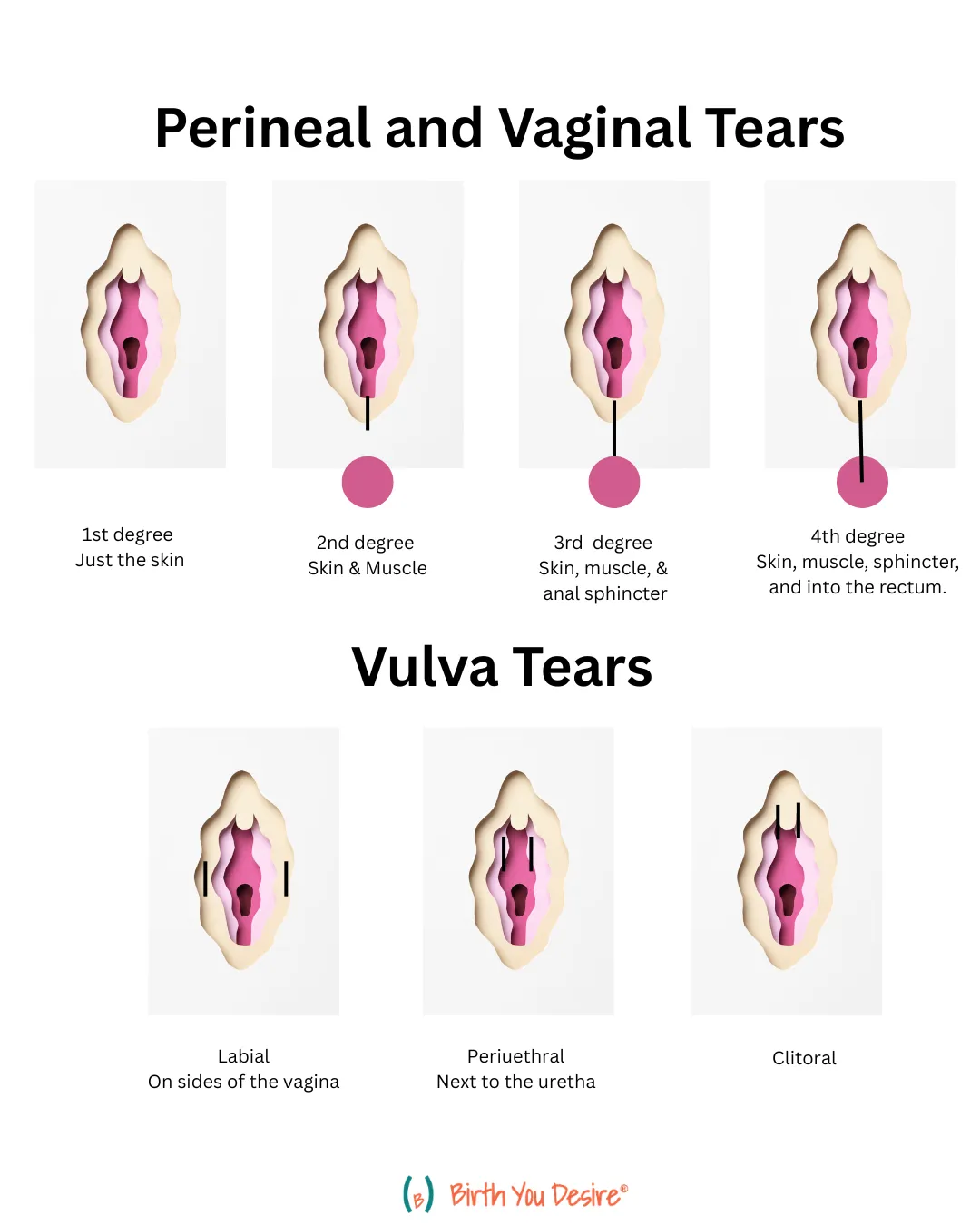
Understanding the degrees helps reduce fear and confusion. Tears fall into four categories. These classifications are based on how deep the tissue injury goes.
First Degree Tear
Involves only the skin
Often heals on its own or with minimal stitches
Fastest recovery
Second Degree Tear
Involves skin and muscle
Most common type
Usually requires stitches
Third Degree Tear
Extends into the anal sphincter
Requires careful repair
Fourth Degree Tear
Extends into the rectal tissue
Most severe and requires surgical repair
What Healing Actually Looks Like
Healing depends on the severity of the tear.
Many people feel a significant improvement within 1 to 2 weeks
Most tears heal within 4 to 6 weeks
Early healing may include:
Pain when sitting or walking
Discomfort during urination or bowel movements
Swelling and tenderness
This is normal. It should improve gradually.
What Helps You Heal Faster
Recovery is not passive. There are specific things that support healing.
1. Keep the Area Clean
Use a peri bottle with warm water after using the bathroom.
2. Reduce Swelling
Ice packs in the first 24–48 hours can help reduce inflammation.
3. Support Tissue Healing
Rest matters. Overexertion can slow healing.
4. Manage Pain Safely
Over-the-counter medications may be recommended by your provider.
5. Protect Bowel Movements
Hydration, fiber, and stool softeners reduce strain on healing tissue.
Preparing for birth and feeling unsure about your options? The Birth You Desire doulas support families in Phoenix, Washington, D.C., and virtually.
When to Call Your Provider
Healing should improve over time.
Call your provider if you notice:
Increasing pain instead of improvement
Signs of infection, such as fever or foul odor
Opening of stitches
Difficulty controlling bowel movements
Early intervention prevents complications.
The Emotional Side of Perineal Tears
This is often not talked about, despite being very important. Know that even with more severe tears, most women recover well with proper care and support.
Some people experience:
Fear about their body
Anxiety about healing
Trauma from the birth experience
You are not alone if you are experiencing any of these feelings.
Can Perineal Tears Be Prevented?
Not always. But risk can be reduced. Research shows that perineal massage may lower the risk of severe tearing for some people. Some providers may recommend you start perineal massage in pregnancy, and others will do it for you in labor.
Other tips that may help to reduce tearing:
Controlled pushing techniques
Warm compresses during labor
Upright or side-lying birth positions
Continuous support during labor
This is where doula preparation and support matter.
Why Doula Support Changes Outcomes
Perineal tears are not just physical. They are connected to:
How labor is managed
How supported or scared do you feel
Your nutrition
A doula helps:
Support positioning and movement
Reduce unnecessary interventions
Help you push effectively
Provide continuous guidance during pregnancy and birth
This can influence both your experience and your recovery. Your body is designed to stretch and heal as a part of childbirth. But with the right support, your birth and recovery can be smoother than you expect. Reach out to learn more.
Birth You Desire doulas have supported thousands of families through pregnancy, birth, and postpartum.
Have Questions About Your Birth Journey? Talk With A Doula.
The Birth You Desire team supports families in Phoenix, Washington DC, and virtually through pregnancy, birth, and postpartum. During a discovery call, we’ll talk about your goals and answer any questions you may have.