Drug-Free Pain Relief Before, During, and After Birth: A Guide to TENS
A Guide to Drug-Free Pain Relief
Before, During, and After the Birth
Yes, there are drug-free ways to ease pain in pregnancy, labor, and postpartum. The most talked-about options are acupressure (pressing on specific points with your fingers), TENS (a small device that sends mild electrical pulses through sticky pads on your skin), and pelvic floor exercises. Each one has its own safety rules and timing. Below, we break down what each does, when it is (and is not) safe to use, and how a birth partner can help.
Key takeaways
TENS is not recommended before 37 weeks of pregnancy and is meant for use once labor begins.
Before birth, only a few gentle acupressure points are suggested. Other points are saved for labor or postpartum.
Birth partners can learn simple pressure techniques to help during contractions.
Pelvic floor exercises help with leaking and recovery after birth.
Always check with your OB, midwife, or healthcare provider before trying any of these.
Why So Many Parents Are Searching for Drug-Free Pain Relief
If you are pregnant, you have probably wondered two things at the same time: "How will I handle labor?" and "What are my options besides medication?" Many families want a full toolbox, not a single plan. Some want to delay medication. Some want to avoid it. Some simply want comfort measures that work alongside whatever choices they make on the day.
This post draws on A Women's Guide to Drug-Free Pain Relief by Dr. Gordon Gadsby (Body Clock Health Care, second edition, 2023), a practical guide covering acupressure, TENS, and pelvic floor toning from pregnancy through postpartum. We have summarized it in plain language and added what we see as doulas and educators: the best comfort plan is the one you understand, practice, and share with your birth team ahead of time.
Important: This article is educational. It is not medical advice. It does not replace guidance from your provider.
The Three Tools, Explained Simply
Acupressure uses firm finger or thumb pressure on specific spots on the body, called acupoints. The goal is to ease a sensation such as pain, tension, or nausea. You usually feel a dull ache within a few seconds.
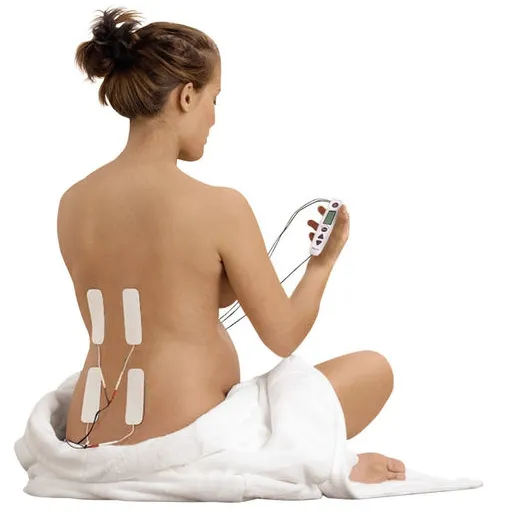
TENS (Transcutaneous Electrical Nerve Stimulation) sends mild electrical pulses through the skin via electrode pads. The idea is that it may block pain signals on their way to the brain and may encourage your body to release its own natural pain-easing chemicals, such as endorphins.
Pelvic floor toning strengthens the muscles around your bladder, bottom, and vagina. It can help with bladder leaking and recovery after birth.
Do not use TENS before 37 weeks. The guide states TENS should only be used when you are in labor.
During Labor: How TENS Is Typically Used
When labor begins, many people use a TENS unit designed for childbirth. These typically use larger pads and a "boost" feature for contractions. The guide describes a simple four-step rhythm:
Place the pads. Four pads go on your lower back, two on each side of the spine, positioned around the line of your navel.
Set the intensity. Turn it up until you feel a pulsing sensation.
Boost during a contraction. The extra surge is meant to "mask" pain by sending signals to the brain faster than pain signals travel (the Gate Control Theory).
Switch to burst mode between contractions. This lower-frequency setting is meant to encourage natural endorphin release.
Practical tips
Once you reach 37 weeks, practice on your forearm so you know how it feels before labor starts.
Tell your provider you are using one specifically made for obstetrics and does not interfere with telemetry monitoring. Note: They may ask you to pause it for certain monitoring or tests.
Do not use it in water. If you plan a water birth, TENS is typically used earlier in labor, before getting in.
It can usually be combined with other pain relief options if you choose them later.
After Birth: Comfort for Your Recovery
Postpartum bodies carry a lot: sore shoulders from feeding, back pain, afterpains, perineal discomfort, and C-section healing. The guide outlines gentle approaches for these, including acupressure and low-frequency (burst mode) TENS, typically around 30 minutes, once or twice a day.
Shoulder and back pain: common after birth and with feeding.
Perineal and after pains: general relaxation and comfort points.
Cesarean incision pain: pads are placed around the incision, never on broken, inflamed, or numb skin. Ask your surgeon or provider before using TENS near a healing incision.
Stress and sleep: many find these routines most helpful as a wind-down at night.
Safety Checklist: When NOT to Use TENS
Please do not use TENS if you:
Have a demand-type pacemaker, a serious or unstable heart condition, or epilepsy
Have undiagnosed pain (get it checked first)
Are under 37 weeks pregnant (unless under medical supervision)
Have metal implants or other concerns your provider has not cleared
Also avoid placing pads on the abdomen during pregnancy, on or near the eyes, mouth, front or sides of the neck, across the head or heart, or on broken, inflamed, infected, or numb skin. Never use TENS in the bath or shower, while driving, or while operating machinery. Stop if you develop a skin reaction.How a Doula Helps You Put This Into Practice
Reading about techniques is one thing. Doing them at 3 a.m. at 5 centimeters is another. A doula can help you:
Build a comfort plan that fits your birth preferences
Practice positions, breathing, and partner touch ahead of time
Prepare your partner to feel confident and useful
Support you through labor and into your postpartum recovery
Frequently Asked Questions
Can I use a TENS machine for labor pain? Many people do once labor begins. We cannot recommend it before 37 weeks of pregnancy or when in labor. Check with your provider first.
Can I use TENS with other pain relief? In general, yes. Many people combine comfort measures with other options if they choose. Tell your care team what you are using.
Can I use TENS in a birth pool? Not in the water. Many people use it earlier in labor and remove it before entering the pool.
Can TENS help after a C-section? Some people use burst-mode TENS around an incision for comfort once cleared by their provider. Never place pads on broken skin.
Rent your TENS unit here.
Final Thoughts
Drug-free pain relief is not about being tough. It is about having options, information, and support. Whether you are exploring comfort techniques for your birth or recovery tools for postpartum, the best plan is one you practice, share with your team, and feel confident adjusting.
Disclaimer: This blog is for educational purposes only and is not medical advice. Birth You Desire doulas do not diagnose or treat medical conditions. Talk with your healthcare provider before using acupressure, TENS, or pelvic floor devices.
Source: Gadsby, G. (2023). A Women's Guide to Drug-Free Pain Relief: Before, During and After the Birth (2nd ed.). Body Clock Health Care Ltd.
Preparing for birth and feeling unsure about your options? The Birth You Desire doulas support families in Phoenix, Washington, DC, and virtually.
Birth You Desire doulas have supported thousands of families through pregnancy, birth, and postpartum.
Have Questions About Your Birth Journey? Talk With A Doula.
The Birth You Desire team supports families in Phoenix, Washington DC, and virtually through pregnancy, birth, and postpartum. During a discovery call, we’ll talk about your goals and answer any questions you may have.