Is It Baby Blues, Postpartum Depression, or Anxiety?
Is It Baby Blues, Postpartum Anxiety, or Postpartum Depression? A Clear Guide for New Parents.
A Clear Guide For New Parents
After birth, emotional changes are common. But not all emotional changes are the same. Many parents are told, “This is normal,” without understanding what normal actually looks like.
This can delay support when it is truly needed.
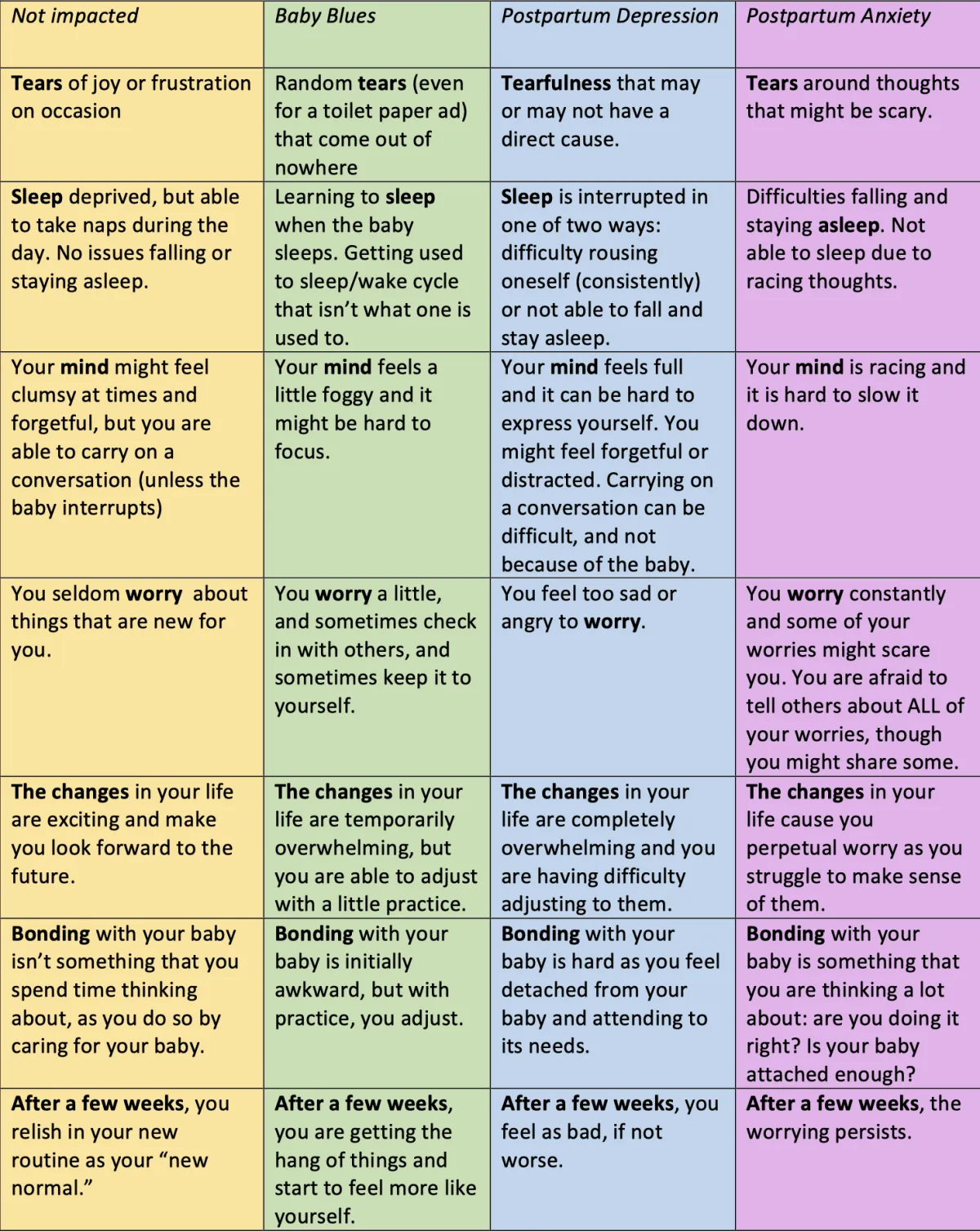
The chart below breaks this down clearly so you can recognize what you are feeling and take action early.
Understanding the Postpartum Emotional Spectrum
Based on the chart created by Dr. Julie Bindeman, postpartum emotions generally fall into four categories:
Not impacted
Baby blues
Postpartum depression
Postpartum anxiety
Let’s walk through the key differences.
1. Not Impacted: What Sable Looks Like
Occasional tears, but tied to real moments
Able to sleep when given the chance
Mild forgetfulness, but thinking remains clear
Excitement about life changes
Natural bonding with the baby
This is the baseline.
You are adjusting, but you still feel like yourself.
Preparing for birth and feeling unsure about your options? The Birth You Desire doulas support families in Phoenix, Washington DC, and virtually.
2. Baby Blues: Common but Temporary
Baby blues affect up to 80 percent of mothers, according to the American College of Obstetricians and Gynecologists.
Signs include:
Random crying without a clear cause
Feeling overwhelmed but still functioning
Mild anxiety or worry
Foggy thinking and fatigue
Improvement within a few weeks
From the chart:
You are adjusting to a new rhythm, and with time, you begin to feel more like yourself again
3. Postpartum Anxiety: Constant Worry That Does Not Stop
This is often missed but very common.
Signs include:
Racing thoughts that will not slow down
Difficulty sleeping due to worry
Fear-based thoughts that feel intrusive
Constant checking or feeling fearful that something is wrong
Difficulty trusting yourself
From the chart:
You may feel afraid to share all your thoughts because they feel overwhelming or scary.
4. Postpartum Depression: When it feels Heavy and Persistent
This is more serious and requires support.
Signs include:
Ongoing tearfulness without relief
Sleep disruption beyond normal newborn patterns
Feeling detached from your baby
Difficulty thinking, speaking, or focusing
Feeling overwhelmed and unable to adjust
From the chart:
After a few weeks, you feel as bad or worse, not better
According to the CDC, about 1 in 7 women experience postpartum depression.
The Key Difference Most People Miss
Here is the simplest way to understand it:
Baby blues improve with time
Depression and anxiety persist or worsen
If you are not feeling better after a few weeks, that is your signal.
Why Early Support Changes Everything
Research consistently shows that early support improves outcomes for both mother and baby.
Untreated postpartum mental health challenges can impact:
Bonding
Breastfeeding
Sleep
Long-term emotional health
This is not about weakness.
This is about biology, hormones, sleep deprivation, and life change all at once.
How a Doula Supports Postpartum Mental Health
At Birth You Desire, we do not just support birth.
We support the full transition into parenthood.
A postpartum doula helps you:
Recognize what is normal and what is not
Reduce overwhelm with structured support
Improve sleep and recovery
Provide emotional grounding and reassurance
Connect you to the right resources when needed
You are not meant to do this alone. If you are unsure where you fall:
Be honest about how you feel
Track your symptoms for 1 to 2 weeks
Talk to someone you trust
Get professional support if symptoms persist
If something feels off, trust that instinct.
Birth You Desire doulas have supported thousands of families through pregnancy, birth, and postpartum.
Have Questions About Your Birth Journey? Talk With A Doula.
The Birth You Desire team supports families in Phoenix, Washington DC, and virtually through pregnancy, birth, and postpartum. During a discovery call, we’ll talk about your goals and answer any questions you may have.